
Scam of the Day
Scam of the day – May 13, 2020 – FTC Continues Actions Against Coronavirus Scammers
To paraphrase Elizabeth Barrett Browning, “how do I scam thee, let me count the ways.” If we are counting the companies trying to sell you totally bogus treatments to either prevent or cure the Coronavirus, the Federal Trade Commission’s (FTC) number would be 120 so far. This is the number of warning letters that the FTC and the Food and Drug Administration (FDA) have sent to companies selling phony cures or treatments for the Coronavirus. These products include CDs with music at frequencies claimed to resist the Coronavirus, high doses of intravenous vitamin C, Chinese herbs, ozone therapy, bio-electric shields, UV light therapy and many more limited only by the scammers’ imaginations. Here is link to all of the warning letters sent by the FTC and the FDA demanding them to stop making claims that their products can treat or cure the Coronavirus. https://www.ftc.gov/coronavirus/enforcement/warning-letters
Companies not complying with the FTC’s demand s within 48 hours are subject to further legal action by the FTC.
According to FTC Chairman Joe Simons, “There is a high level of anxiety over the potential spread of coronavirus. What we don’t need in this situation are companies preying on consumers by promoting products with fraudulent prevention and treatment claims. These warning letters are just the first step. We’re prepared to take enforcement actions against companies that continue to market this type of scam.”
TIPS
As for healthcare products in general, you should be skeptical about companies that promise miraculous cures to illnesses and medical conditions. The world is full of snake oil salesmen. You should also be wary of any healthcare product that is sold exclusively either over the Internet or through mail-order advertisements. The best course of action is to ask your physician about the effectiveness of a particular product or program before you buy it. As for the Coronavirus specifically, the best place to get reliable information is the World Health Organization https://www.who.int/health-topics/coronavirus
For those of you receiving the Scam of the day through an email, I just want to remind you that if you want to see the ever increasing list of Coronavirus scams go to the first page of the http://www.scamicide.com website and click on the tab at the top of the page that indicates “Coronavirus Scams.”
Scam of the day – May 12, 2020 – Unclaimed Property Scam
A Scamicide reader recently forwarded to me an email that informed her that unclaimed money from a source not indicated was being held on her behalf and she needed to respond to the email in order to claim the money. This particular email was a total scam, however, you may receive a “legitimate” email or letter informing you that there are billions of dollars of unclaimed or abandoned money being held by the states and federal government and that some of that money is yours. For a fee, the person or company contacting you will assist you in locating that property and claiming it for you. In some instances, the letter or email may appear to come from the National Association of Unclaimed Property Administrators which is a legitimate organization, but not one that initiates communications to individuals whose funds they are holding.
The truth is that various state and federal agencies are indeed holding more than 24 billion dollars of unclaimed money that is waiting to be retrieved by the rightful owners. State laws require financial institutions, such as banks, to turn over money from inactive accounts. Among the assets held by these agencies are savings and checking accounts, stocks, uncashed dividend checks, certificates of deposit and utility security deposits. However, you don’t need the help of these companies contacting you offering their assistance in order to retrieve your unclaimed assets.
The “legitimate” companies that may contact you offering to assist you in getting back your missing money cannot have any specific information as to what you are owed because of privacy regulations that prohibit them from obtaining that information.
TIP
The best place to find a helping hand to assist you in locating and getting back your abandoned property is at the end of your own arm. Go to the website of the National Association of Unclaimed Property Administrators at www.unclaimed.org where you can link on to the website for your own state’s agency that deals with abandoned property and take the steps necessary to claim your abandoned property at no cost to you. Other useful websites for locating money that you may be owed include www.irs.gov, the website for the IRS where you can find tax refund money you may be owed and www.pbgc.gov, the website of the Pension Benefits Guaranty Corporation, a federal agency that holds unclaimed pension funds.
For those of you receiving the Scam of the day through an email, I just want to remind you that if you want to see the ever increasing list of Coronavirus scams go to the first page of the http://www.scamicide.com website and click on the tab at the top of the page that indicates “Coronavirus Scams.”
If you are not a subscriber to Scamicide.com and would like to receive daily emails with the Scam of the day, all you need to do is to go to the bottom of the initial page of http://www.scamicide.com and click on the tab that states “Sign up for this blog.”
Scam of the day – May 11, 2020 – FTC Settles Claim Against “Free Trial” Scammer
Three years ago, I told you about Indiana Attorney General Curtis Hill warning people about “free trial” scams. These scams begin with ads that appear to offer a free trial of a product with the consumer only being required to pay a small shipping and handling charge. These ads, which are for many products, but most commonly weight loss products often feature fake celebrity endorsements. While there are companies that indeed do offer free trials of their products, the scammers use fine print that the consumer never reads or even sees that charge the victim of the scam’s credit card for the product if it is not returned within a few days. Making things even worse, many of the scammers also automatically enroll the victims of the scam to receive monthly deliveries of their products, all of which are paid for by the credit card which the victim of the scam provided thinking the card was only to be charged the small fee for shipping and handling of their “free” product.
Last year I informed you that the Federal Trade Commission (FTC) brought a legal action against AH Media Group LLC and its owners for operating a scam involving “free trials” of eight different cosmetic and dietary supplement product lines including Amabella Allure, Adelina, Parisian Glow and Tone Fire Garcinia. All of the products made phony claims of promoting younger looking skin or weight loss. According to the FTC, the defendants charged consumers for both the “free” trial product and then signed them up for ongoing monthly subscription plans of which the consumers were unaware. The defendants would ask for the consumer’s credit card or debit card to cover the nominal cost of shipping of the allegedly free trial offer, but then the company would make continuing charges. Now the FTC has settled its claims against AH Media Group and the company has agreed to stop its illegal actions. In addition, AH Media Group LLC will be paying a fine which may be used to pay victims of the scam. As details emerge in regard to any refund program I will notify you of them.
TIPS
This scam is very easy to avoid. If there ever was an offer that was too good to be true, this is it. This is also a good time to remind you to never use your debit card for purchases. Only use your credit card. If you are scammed by fraudulent charges on your credit card, you can easily get the charges taken off of your credit card. The consumer protection laws that govern debit cards are not as strong and if you delay notifying the bank where the account tied to your debit card is located, you can potentially lose everything in that bank account with no recourse.
As for weight loss products, the truth is that there are no quick fixes when it comes to weight loss and you should be wary of any product that promises you can lose tremendous amounts of weight quickly without dieting or exercise. You should also be wary of any weight loss product that is sold exclusively either over the Internet or through mail-order advertisements. It is also important to remember that no cream that you rub in your skin can help you lose substantial weight and no product can block the absorption of fat or calories. The best course of action is to ask your physician about the effectiveness of a particular weight loss product or program before you reduce your wallet in an effort to reduce your waistline.
Finally, there never is a reason to provide your credit or debit card information for a “free” offer. Also, because there rarely is anything fine in fine print, it is important whenever you purchase something to read the fine print that contains the terms of what you have agreed to.
For those of you receiving the Scam of the day through an email, I just want to remind you that if you want to see the ever increasing list of Coronavirus scams go to the first page of the http://www.scamicide.com website and click on the tab at the top of the page that indicates “Coronavirus Scams.”
If you are not a subscriber to Scamicide.com and would like to receive daily emails with the Scam of the day, all you need to do is to go to the bottom of the initial page of http://www.scamicide.com and click on the tab that states “Sign up for this blog.”
Scam of the day – May 10, 2020 – IRS Deadline for Submitting Direct Deposit Information for Stimulus Checks
Last Friday the Treasury Department announced that it had electronically sent more than 200 billion dollars of CARES Act stimulus payments to approximately 130 million Americans in the program’s first four weeks. Payments under the CARES Act are determined in the vast majority of instances by the information contained on your 2019 income tax return or if you have not filed a 2019 income tax return yet, by your 2018 income tax return. These tax returns are being used to determine both the amount of the stimulus check that you shall receive as well as to where the stimulus payment will be made. People who had provided their bank account number and bank’s routing number to the IRS as a part of their federal income tax return had their payments sent to their bank accounts electronically. After May 13th the federal government will begin sending paper checks to those people qualifying for the stimulus checks that did not provide bank account information on their most recent federal income tax return. It is expected that people will be receiving their paper checks in the mail beginning in late May and into June. However, if you did not provide bank account information in your most recent federal income tax return, you can still have your payment sent to you electronically if you provide the necessary information to the IRS by noon on May 13th at he IRS’ Get My Payment portal. Here is the link to the Get My Payment portal. https://www.irs.gov/coronavirus/get-my-payment
TIPS
Scammers are quite active in using the CARES Act stimulus payments as a basis for many scams. Trust me, you can’t trust anyone. Whenever you are contacted on the phone, by email or text message, you cannot be sure who is really contacting you. Even if your Caller ID indicates the call is from a legitimate federal agency such as the Treasury Department, it is easy for a scammer to “spoof” that number and make it appear on your Caller ID as if the call is legitimate when it is not. Neither the IRS, the Treasury Department or any other federal agency will be contacting you by phone, email or text message about the stimulus checks. Anyone contacting you by phone, email or text message indicating that he or she is a federal employee is a scammer. Also, if you are going to use the Get My Payment portal either to provide banking information or to check on the status of your payment, make sure that you are using the correct portal. Scammers are adept at constructing websites that look identical to the Get My Payment portal in order to steal your personal information and use it to make you a victim of identity theft.
Another good indication that you are being contacted by a scammer in regard to your CARES Act payment is that the official name of the payment is your Economic Impact Payment. Any communication purporting to be from the federal government that refers to the payment by any other name is an obvious scam.
For those of you receiving the Scam of the day through an email, I just want to remind you that if you want to see the ever increasing list of Coronavirus scams go to the first page of the http://www.scamicide.com website and click on the tab at the top of the page that indicates “Coronavirus Scams.”
If you are not a subscriber to Scamicide.com and would like to receive daily emails with the Scam of the day, all you need to do is to go to the bottom of the initial page of http://www.scamicide.com and click on the tab that states “Sign up for this blog.”
Scam of the day – May 9, 2020 – Mother’s Day Scams
Tomorrow is Mother’s Day and once again we must be vigilant about not falling prey to scams related to this holiday. Anything popular with the public will always be popular with scammers. Although for many of us Mother’s Day is an opportunity to show our mothers how much we love and appreciate them, for scammers it is yet another opportunity to scam people. One common Mother’s Day scam involves an email that you get offering Mother’s Day gifts such as flowers, jewelry, shoes or clothing at tremendously discounted prices. All you need to do is to click on a link to order online. The problem is that many of these offers are indeed scams. If you click on the link, one of two things can happen and both are bad. Sometimes the link will take you to an order form where you provide your credit card information, but never get anything in return. Instead your credit card information is used to make you a victim of identity theft. Even worse is the other possibility which is by clicking on the link, you will unwittingly download a keystroke logging malware program that will steal all of the personal information stored on your computer and use that information to make you a victim of identity theft. Be careful when making online purchases. Merely because a website offering great prices may be highly listed on Google or other search engines does not mean that it is legitimate. All it means is that the scammers know how to manipulate the positioning of their website in a Google search. Check out any company with which you may not be familiar with the Better Business Bureau or even Google the company’s name with the word “scam” added to the search and see what you come up with. Even if you are dealing with a legitimate online company, make sure that your communications are encrypted when you send personal information or credit card information. The easy way to do this is to look to see if the the web address of the company changes when you go to the page to input credit card information from “http” to “https” indicating that your data is being encrypted. And of course, don’t use your debit card for retail purchases either online or in a brick and mortar store because you have less protection from fraud with a debit card than a credit card.
Finally, another Mother’s Day scam involves e-cards which are great, particularly for those of us who forget to get a Mother’s Day card until the last minute or weren’t able to buy one this year due to the Coronavirus pandemic which has dramatically reduced our ability to shop in stores. However, identity thieves will send emails purporting to contain a link to an electronic Mother’s Day card, but instead download that dangerous keystroke logging malware that I described above.
TIPS
It is always dangerous to buy anything online from any store or company with which you are not familiar. Check out the company with the Better Business Bureau, your state’s Attorney General, the Federal Trade Commission or just do a Google search to see if the company is legitimate. Even then you are better off going directly to the company’s website rather than dealing with a company through an email that may just be a forgery of an email from a legitimate company. As always, if the offer you receive sounds too good to be true, it usually is. As for e-cards, never open an e card unless it specifically indicates who sent the card. Phony e cards will not indicate the name of the sender.
For those of you receiving the Scam of the day through an email, I just want to remind you that if you want to see the ever increasing list of Coronavirus scams go to the first page of the http://www.scamicide.com website and click on the tab at the top of the page that indicates “Coronavirus Scams.”
If you are not a subscriber to Scamicide.com and would like to receive daily emails with the Scam of the day, all you need to do is to go to the bottom of the initial page of http://www.scamicide.com and click on the tab that states “Sign up for this blog.”
Scam of the day – May 8, 2020 – FTC Sends Warning Letters to 10 Multi-Level Marketing Companies
The Federal Trade Commission (FTC) has sent warning letters to ten multi-level marketing companies demanding they stop claiming that their products can treat or prevent the Coronavirus and stop making misleading claims about the amount of money people can earn by participating in their multi-level marketing companies. The ten companies are doTERRA International LLC, Pruvit Ventures, Inc., Total Life Changes, LLC, Tranont, Modere, Inc., Arbonne International, LLC, IDLife, LLC, It Works Marketing, Inc. Rodan & FIelds, LLC and Zurvita, Inc. Sometimes a legitimate multilevel marketing business may look quite similar to an illegitimate pyramid scheme, which is one of the reasons that so many people fall prey to these scams. For every legitimate multilevel marketing company, such as Mary Kay and Amway, there are many that are just scams. In a legitimate multilevel marketing company, investors make money by selling products to the public and by recruiting new salespeople. In a pyramid scheme the source of profits is based primarily on the recruiting of new members or salespeople.
In these cases, none of the ten companies are accused by the FTC of being illegal pyramid schemes, but six of the companies are alleged to have made false representations that their products could treat or prevent the Coronavirus and also falsely misrepresented the amount of money that could be earned selling their products. Three of the companies are alleged to have made false representations as to the amounts of money people could earn selling their products and one company is accused of making false health claims.
According to Andrew Smith, Director of the FTC’s Bureau of Consumer Protection, “During this health and economic crisis, we are on the lookout for false income claims for work-at-home opportunities, in addition to spurious health claims that products can treat or prevent COVID-19.”
TIPS
Anyone who is considering investing in what is represented to be a multilevel marketing business should always investigate the company and the terms of investment carefully before investing any money. In addition, you should also check out the company with the FTC and your state’s attorney general to make sure that the company is legitimate before investing any money. Here is a link to information from the FTC that you should consider before investing in a multilevel marketing business. http://www.consumer.ftc.gov/articles/0065-multilevel-marketing
As for supplements that purport to provide health benefits, you should never buy them or sell them unless you have thoroughly investigated the legitimacy of the claims and it cannot be overemphasized that there are no products being sold at this time that have been scientifically proven to treat or prevent the Coronavirus.
For those of you receiving the Scam of the day through an email, I just want to remind you that if you want to see the ever increasing list of Coronavirus scams go to the first page of the http://www.scamicide.com website and click on the tab at the top of the page that indicates “Coronavirus Scams.”
If you are not a subscriber to Scamicide.com and would like to receive daily emails with the Scam of the day, all you need to do is to go to the bottom of the initial page of http://www.scamicide.com and click on the tab that states “Sign up for this blog.”
Scam of the day – May 7, 2020 – Equifax Data Breach Settlement Extended Claims Period
Recently, you may likely have received an email with the notice from the Equifax Breach Settlement Administrator reproduced below pertaining to the proposed settlement of claims brought by the Federal Trade Commission (FTC), the Consumer Financial Protection Bureau (CFPB) and all but two of the states’ Attorneys General related to the totally avoidable 2017 data breach in which personal data on more than 147 million people was stolen from Equifax. The stolen personal information included the names, dates of birth and Social Security numbers of 147 million people putting them in serious danger of identity theft for the rest of their lives. Unfortunately, much of the reporting, most notably the reporting that everyone would be getting $125 is not accurate.
For details of the proposed terms of the settlement, I suggest you go to the Scam of the day For January 20, 2020 https://scamicide.com/2020/01/19/scam-of-the-day-january-20-2020-equifax-settlement-claim-deadline-approaching/
The required approval of the settlement by a judge has been delayed while objections to the settlement filed by a number of victims are considered. While the initial period for filing claims to be included in the settlement ended on January 22, 2020, a new extended claims period has commenced for people who become victims of identity theft between 2020 and 2024 as a result of the Equifax data breach as explained in the notice below.
TIPS
Here is a copy of the recent notice from the Equifax Breach Settlement Administrator:
Equifax Breach Settlement Administrator (info@equifaxbreachsettlement.com)To:you Details
| This is a Court approved legal notice.
Don’t forget, if your personal information was impacted in the 2017 Equifax data breach, and you have a problem with identity theft or fraud because of the breach within the next four years, you may be eligible for additional Settlement benefits. Claims for benefits during the “Extended Claims Period” must be made by January 22, 2024, at www.EquifaxBreachSettlement.com. When the Settlement becomes effective after all appeals are resolved, you also may be eligible for free identity restoration services to help you remedy the effects of identity theft and fraud. Please note: The deadline for the “Initial Claims Period” has passed. You can no longer file claims for Out-of-Pocket Losses or Time Spent that occurred before or up through January 22, 2020. If you filed a claim during the “Initial Claims Period,” do not try to file the claim again, as that will delay the processing of your claim. Please also note that no Settlement benefits will be distributed or available until all appeals are resolved, and the Settlement becomes effective. We currently do not know when these appeals will be resolved. When the appellate court provides a schedule for the appeal, we will update the Settlement website. Are You Eligible: You are a Class Member and eligible for Extended Claims Period Settlement benefits if you are a U.S. consumer whose personal information was impacted by the Equifax data breach. If you are unsure of whether you are a Class Member, visit www.EquifaxBreachSettlement.com. Benefits: 1. Cash Payments for Certain Losses incurred during the next four years: During the Extended Claims Period, you can seek reimbursement for Out-of-Pocket Losses or Time Spent (but not losses of money and time associated with freezing or unfreezing credit reports or purchasing credit monitoring or protection services) if you certify that you have not already received reimbursement for the claimed loss. All such claims must be made by January 22, 2024 and will be paid on a first come first-served basis. 2. Free Identity Restoration Services: When the Settlement becomes effective, you may be eligible for at least 7 years of free identity restoration services to help you remedy the effects of identity theft and fraud. You do not have to make a claim for this benefit. Visit www.EquifaxBreachSettlement.com to learn more about using these services. You cannot make claims for Credit Monitoring Services, Alternative Reimbursement Compensation, or Out-of-Pocket Losses or Time associated with freezing or unfreezing credit reports or purchasing credit monitoring or protection services. How to Get Extended Claims Period Benefits: To get cash payments, you must submit a claim:
You must submit an Extended Claims Period claim by January 22, 2024. Certain claims may require supporting documents. For more information regarding free identity restoration services, visit www.EquifaxBreachSettlement.com. You do not need to file a claim to get those services. This is only a summary of the benefits available to eligible Class Members during the Extended Claims Period. For more information, visit www.EquifaxBreachSettlement.com. This is a Court authorized notice, not a lawyer advertisement. Email Disclaimer The Equifax Data Breach Settlement Administrator will never ask you to provide sensitive information, such as, your Social Security Number or Tax ID, Bank Account Number, Credit Card Number, Driver’s License or Passport Number, or Password, etc. via email. All email communications sent by the Equifax Data Breach Settlement Administrator OR on behalf of the Settlement Administrator will originate from info@equifaxbreachsettlement.com, the official email address of the Settlement. If you receive an email which you suspect to be fraudulent, do not reply or do anything it instructs you to do, but immediately forward it to abuse@equifaxbreachsettlement.com. |
For those of you receiving the Scam of the day through an email, I just want to remind you that if you want to see the ever increasing list of Coronavirus scams go to the first page of the http://www.scamicide.com website and click on the tab at the top of the page that indicates “Coronavirus Scams.”
If you are not a subscriber to Scamicide.com and would like to receive daily emails with the Scam of the day, all you need to do is to go to the bottom of the initial page of http://www.scamicide.com and click on the tab that states “Sign up for this blog.”
Scam of the day – May 6, 2020 – Blessing Loom Chain Letter Scam
Illegal pyramid schemes take many forms. Year after year since 2015 I have warned you about the Secret Sister Gift Exchange, which keeps reappearing each year around the holidays. It seems harmless enough when you see it come up in your email or on social media, such as Facebook and Twitter where it has increasingly been found. It starts when you are provided a list of six people. You are told to send a gift worth at least ten dollars to the first person on the list, remove that person’s name from the list, move the second person on the list to the first position, add your name to the end of the list and then send the list to six of your friends. In theory, you will receive thirty-six gifts for your small contribution of ten dollars.
So where is the harm?
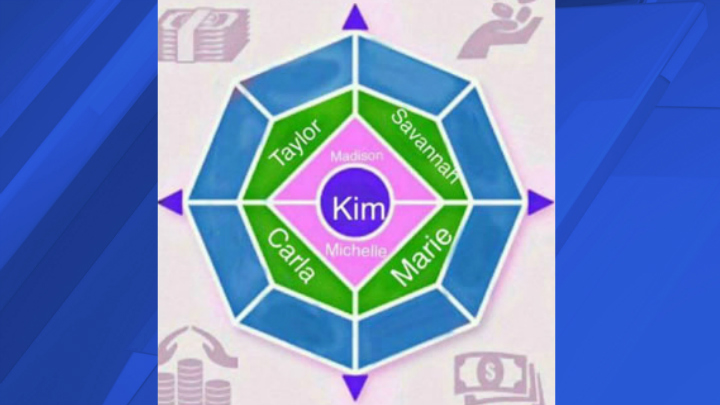
First of all, it is a blatantly illegal chain letter and violates Title 18 of the United States Code, Section 1302. In addition, like all chain letters, ultimately, it is destined to fail because it is a pyramid scheme where eventually we run out of people on the planet to maintain the scheme. Now a scam similar to the Secret Sister Gift Exchange has reappeared. It is the Blessing Loom and it first appeared in 2016, but has come back and, particularly with so many people concerned about their finances due to the Coronavirus pandemic, is scamming more and more people desperate for cash. The Blessing Loom offers you the opportunity to be paid $800 for a one-time payment of $100 using a PayPal account or other digital payment service. Your name fills a space outside the loom, and you’re told to recruit others to fill in the other spaces. Once you advance and it’s your turn to be in the center, you receive the money.
Here is a copy of one of the posts used in this scam.
TIPS
Like the Secret Sister Gift Exchange, the Blessing Loom is nothing more than a repackaged chain letter. You should avoid all chain letters regardless of the guise under which you receive them. They are illegal. In addition, although in some instances this particular chain letter is turning up on Facebook pages, it is a violation of your Facebook terms of agreement, so you potentially face the loss of your Facebook account if you participate in the scheme.
For those of you receiving the Scam of the day through an email, I just want to remind you that if you want to see the ever increasing list of Coronavirus scams go to the first page of the http://www.scamicide.com website and click on the tab at the top of the page that indicates “Coronavirus Scams.”
If you are not a subscriber to Scamicide.com and would like to receive daily emails with the Scam of the day, all you need to do is to go to the bottom of the initial page of http://www.scamicide.com and click on the tab that states “Sign up for this blog.”
Scam of the day — May 5, 2020 – Another Mavis Wanczyk Twitter Scam
Many people may not remember the name of Mavis L. Wanczyk, but she was the lucky winner of a 758 million dollar Powerball drawing in 2017. Not long after she claimed her prize, a scam started appearing in which many people received emails with the message line referring to the Mavis L. Wanczyk Cash Grant. The email indicated that you were chosen to receive a large cash grant from Mavis L. Wanczyk. All the lucky strangers receiving the emails had to do was provide personal information in order to qualify for the grant. In addition, phony social media accounts on Twitter, Facebook and Instagram were also set up in Ms. Wanczyk’s name through which people were contacted with the same phony offer of free money informing them that in order to qualify for the grant they merely needed to provide personal information.
Now the scam appears to be resurfacing in large numbers as evidenced by the many emails I am receiving from Scamicide readers complaining of this scam. The scam has now migrated from emails to Twitter as shown by the tweet reproduced below. Of course, the new tweet and all of the previous emails and social media messages purportedly from Mavis Wanczyk are scams. No one is offering you money for nothing (nor for you Dire Straits fans, “chicks for free”). Providing personal information such as your Social Security number or bank account information in order to direct the wiring of funds merely results in your becoming a victim of identity theft and/or your bank account being looted.
Here is a copy of a tweet that had been circulated.

TIPS
It is difficult to win a lottery you have entered. It is impossible to win one that you have never entered and neither lottery winners, nor anyone else is sending out messages through the Internet offering free money to anyone who responds with personal information. Never give out personal information that can make you vulnerable to identity theft unless you have absolutely verified that the party requesting the personal information is legitimate and has a legitimate need for the information. Also never pay anything to a lottery claiming you owe fees in order to claim your prize. This is a telltale sign of a scam.
For those of you receiving the Scam of the day through an email, I just want to remind you that if you want to see the ever increasing list of Coronavirus scams go to the first page of the http://www.scamicide.com website and click on the tab at the top of the page that indicates “Coronavirus Scams.”
If you are not a subscriber to Scamicide.com and would like to receive daily emails with the Scam of the day, all you need to do is to go to the bottom of the initial page of http://www.scamicide.com and click on the tab that states “Sign up for this blog.”
Scam of the day – May 4, 2020 – Illegal Pirate Streaming Services Booming
Largely due to the Coronavirus quarantining of people around the world, millions of people are turning to streaming services such as Netflix to see popular movies and shows such as Netflix’s “Tiger King: Murder, Mayhem and Madness.” Scam artists are quite adept at taking advantage of everything in which the public is interested and turning it into a scam and so it is with our interest in streaming services such as Netflix and Disney +. Scammers have set up pirate streaming services that promise to provide at free movies and shows for which you would have to pay at other premium services. Unfortunately, many of these websites offering pirated versions of movies and shows are merely lures to either gain information used to make people victims of identity theft or to lure people into downloading harmful malware, such as ransomware.
Attempting to stream an illegal version of a movie is not only illegal and unethical, but it could also lead to your being scammed out of money. Many of these scam websites and malicious files require you to take a survey in order to see the free, pirated version of the movie. These surveys may ask for personal information including credit card information that will be used to make you a victim of identity theft. In other instances these websites with malicious files will automatically download malware on to your phone or computer. In the case last year of the bogus websites promising a free pirated version of the “Avengers: Endgame” movie, an online search for websites promising to provide the movie for free took you to one site in particular that appeared to provide the movie, but a few moments after the movie started, it stopped and a pop up appeared requiring you to set up an account. The pop up said that the account was free and that all you needed to do was provide your email address and a password. Once you did this, you were then instructed to provide a credit card number and the CVC security code on the back of the card merely to verify that you were located in a country where the website was licensed to distribute the movie. Unfortunately, the website did not provide the “Avengers:Endgame.” The few minutes of what you initially saw of the movie were just scenes taken from the readily available trailers for the movie. So not only did people falling for this scam not get to see the movie, they ended up providing their credit card information to the scammers in addition to providing a password, which, in too many instances, was the same password the scam victim used for other online services such as online banking. The moral of this story is that trying to view a pirated version of a popular movie or show for free will only put you into a predicament that even the Avengers couldn’t get you out of.
TIPS
The first and foremost tip is not to use illegal streaming services. They are illegal and what they are doing is also unethical. Don’t trust search engine searches to provide you with legitimate websites for streaming services. A prominent position in a Google or other search engine search only means that the websites appearing high were adept at understanding the algorithms used to position websites. Never provide a credit card as a means of verification. It is only a means of payment and as for the justification in the “Avengers: Endgame” scam that the credit card was needed to verify that you are located in a country where the website is licensed to distribute the movie, pirated versions are not licensed anywhere. Another red flag that indicates that the website offering to provide a movie for free is a scam is the extension used for the video file. Common extensions for video files are avi, mkv and mp4. However, malware loaded files often end in .exe so that if you see that extension on the attached file, you know it is a scam. Finally, as always, you should have unique passwords for all of your online accounts so that in the event that a password on one of your accounts is hacked or otherwise compromised, all of your accounts will not be in jeopardy.
For those of you receiving the Scam of the day through an email, I just want to remind you that if you want to see the ever increasing list of Coronavirus scams go to the first page of the http://www.scamicide.com website and click on the tab at the top of the page that indicates “Coronavirus Scams.”
If you are not a subscriber to Scamicide.com and would like to receive daily emails with the Scam of the day, all you need to do is to go to the bottom of the initial page of http://www.scamicide.com and click on the tab that states “Sign up for this blog.”