

Scams, identity theft and cybercrimes threaten everyone.
Every year people lose billions of dollars to scams, identity theft and cybercrime. No one is immune to these dangers. Young and old alike are victims and if you think you are too smart to become a victim, you are wrong. According to the National Association of Securities Dealers wealthy, financially literate and astute people are actually more likely to become victims of financial scams.
The key to protecting yourself from scams cybercrime and identity theft is education and that is where Scamicide.com comes in. Here at Scamicide.com you will learn how to recognize scams, cyber security threats and risks of identity theft as well as how to avoid them. Here at Scamicide.com we also alert you each and every day to the latest developments in scams, cyber security and identity theft and tell you what you need to do to protect yourself. It is a dangerous world out there, but Scamicide.com can help you make it safer.




Scam of the day – November 1, 2026 – Phony Coupon Scam
Everyone loves coupons and like many things in our lives, coupons which used to be found commonly in newspapers and magazines have migrated online. In recent years scammers have been perpetrating phony coupon scams on social media. Among the companies affected by these phony coupons were Bath and Body Works, Costco, Aldi, Starbucks and Trader Joe’s. As I have warned you many times in the past, Facebook has become a hotbed for phony online coupons. The phony coupons looks quite legitimate which means nothing because it is very easy to copy the company logos and make the coupons appear to be genuine.
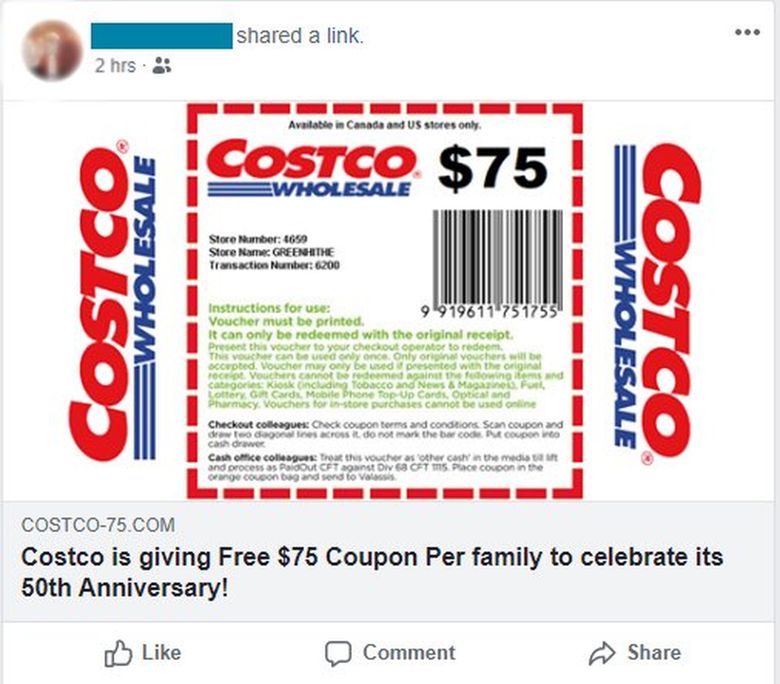
The way that many phony coupon scams work is that in order to qualify for the coupon, you must complete a survey in which you are required to provide much personal information that is used to make you a victim of identity theft. In other versions of the scam, the scammer actually asks for your credit card numbers. In yet another version of the scam you are required to buy many costly items in order to claim your “free” coupon. Many of the coupon scams also require you to forward the coupon to friends which make the phony coupons appear more trustworthy when they are received by your friends. Ultimately, in all of these scams, the coupons are worthless and you get nothing but the opportunity to become a victim of identity theft. Here is a copy of a phony coupon appearing online. It was provided by the Identity Theft Resource Center.
TIPS
If the coupon appears too good to be true, it usually is a scam. No company could cover the cost of giving away vast numbers of $75 coupons although sometimes, participants in legitimate surveys are promised a chance to win a prize in a drawing. Facebook is a favorite venue for scammers perpetrating this type of scam because often unwary victims will unwittingly share the scam with their friends. One way to determine if a coupon is legitimate is to look for the expiration date found on most coupons. The phony Costco coupon shown above like most phony coupons does not carry an expiration date. The best place to go to find out if a coupon is legitimate is to go to the company’s website to see what real coupons are being offered.
If you are not a subscriber to Scamicide.com and would like to receive free daily emails with the Scam of the day, all you need to do is to go to the bottom of the initial page of http://www.scamicide.com and type in your email address on the tab that states “Sign up for this blog.”
RECENT BOOKS BY STEVE

